Death and the Boundary Between Life and Death
The CallerDeath and the Boundary Between Life and Death is not confined to a final moment in the novel. It presses into kitchens, bedrooms, conversations, and police work: anticipated in aging and incurable illness, made terrifyingly immediate by a false death notice, and experienced as a private fear that can distort the living person’s sense of their own body. The boundary is at once physical, social, and psychological—something people try to prepare for, deny, counterfeit, or hold at a distance, without being able to make it disappear.
Mortality Enters Ordinary Life
After turning seventy, Gunilla Mørk begins to measure her life against the deaths she reads about. At her birthday celebration, she has enjoyed the food and company of her children, friends, and neighbours, yet the milestone prompts the question of whether she will reach eighty. Her philosophy is to appreciate the good in each day, and the bright morning seems to offer a reason to do so. Still, death has become a presence that interrupts this ordinary gratitude. Looking at her dry, wrinkled hand, she is briefly frightened by the evidence of age, then reassures herself that it remains warm and capable. The moment does not remove her fear; it shows how quickly a familiar body can become a reminder of its eventual end.
That unease is not simply an abstract preoccupation. Gunilla reads death notices carefully, noting the birth years of those who have died and comparing their allotted time with her own. The newspaper turns mortality into a daily practice of attention: she encounters death as printed information while sitting alive in her kitchen, with sunlight at the window and coffee in front of her. The contrast makes the boundary feel both secure and fragile. She is present in the familiar room, but the notices keep bringing the fact of death close enough to measure.
Illness and the Work of Anticipation
For Astrid Landmark and her husband Helge, death is not a distant possibility but an outcome they understand in detail. Helge’s amyotrophic lateral sclerosis has progressed rapidly since its onset six months earlier. The illness weakens the body through paralysis and may eventually prevent swallowing, speech, and breathing; it is incurable, and treatment is symptomatic. Astrid knows what lies ahead, but knowledge does not make the prospect easier to face. She struggles to look at him and turns to ironing, laundry, bread-making, and other household tasks. Keeping busy gives her a way to delay the truth, while their shared inability to speak freely about death leaves important matters suspended.
Those matters are practical as well as emotional. Astrid and Helge need to consider death and burial, and she wonders what will happen to their house and to the cabin at Blefjell that Helge called El Dorado. She imagines the future work of mowing the lawn, clearing snow, staining the dry house, and pruning the fruit trees without him. The questions give impending death a domestic scale: it threatens not only a life but the routines, division of labour, and shared future organized around that life.
The illness also alters the meaning of familiar objects. A commode chair, bedpan, pill organiser, and wheelchair make Helge’s condition present throughout the home. The wheelchair’s large grey wheel fills Astrid’s view at night and again in the morning, an image through which the machinery of care seems to draw her into the illness. Yet Helge remains more than the visible signs of his decline. Astrid remembers the tall, broad-shouldered aeroplane mechanic she met when she was nineteen and later married; she still needs him, while recognizing the painful difference between that remembered man and the dependent man in the chair. The scene holds affection and exhaustion together rather than resolving one into the other.
Death as a Social Procedure—and a Hoax
The false obituary for Gunilla exposes how easily the formal signs of death can invade the life of someone who is still alive. In her kitchen, she sees her own name in the newspaper and reads that she has died in her sleep. The notice gives her correct birth information and states that she died on July 25, so the ordinary ways of checking the claim initially deepen the shock rather than dispel it. She lets go of the newspaper, clutches her heart, and struggles to breathe. A death notice, usually a record of an irreversible fact, has been converted into a weapon that makes a living reader confront her own reported absence.
The falsehood works because death is publicly recognized through procedures and signs: a name, dates, a notice, and the expectations attached to them. Gunilla’s immediate search for a mistake or another person with the same name shows her trying to restore the distinction between the printed report and her present existence. The episode does not make her dead; it makes the announcement itself a source of terror. It also reveals how a prank can borrow the authority of a social ritual while leaving the targeted person to bear its bodily consequences.
A different crossing of the same boundary occurs when Helge asks whether he can reserve a place in the car presented by representatives of Memento Funeral Home. The question follows a visit that has brought the idea of his death into his home before his actual death. Later, people are astonished that someone used a telephone to frighten and humiliate a dying man in this way. The disturbance is partly procedural: the funeral-home representative had no reason to distrust the polite voice on the call, because ordinary social arrangements depend on trust. But for Helge, death has already entered the house figuratively through terminal illness; the fabricated funeral arrangement makes that anticipated future arrive as a concrete intrusion.
Shared Mortality and Private Fear
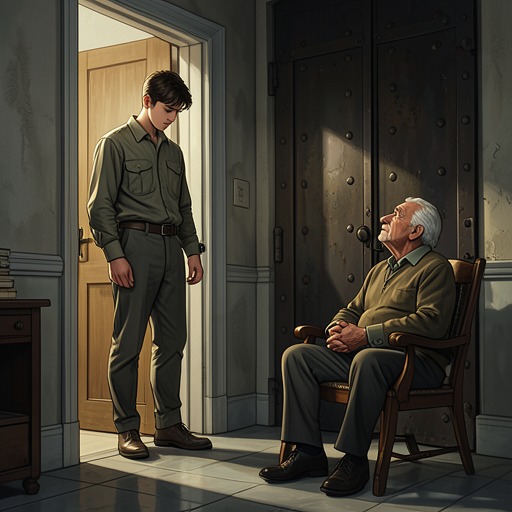
In a conversation with seventeen-year-old Johnny, Henry Beskow rejects the notion that old age places him alone at the edge of death. He tells Johnny that the young are there too, even if they prefer to believe they have a full life ahead. His image of aging is a repeated movement like bobbing in the surf, toward shore and back out, from morning to evening. Johnny calls this a lie, resisting the old man’s account even as he asks what it feels like to approach death. Their exchange sets youthful confidence against an older person’s acceptance of mortality, but it does not settle whether that acceptance is comforting or merely a way of enduring what cannot be changed.
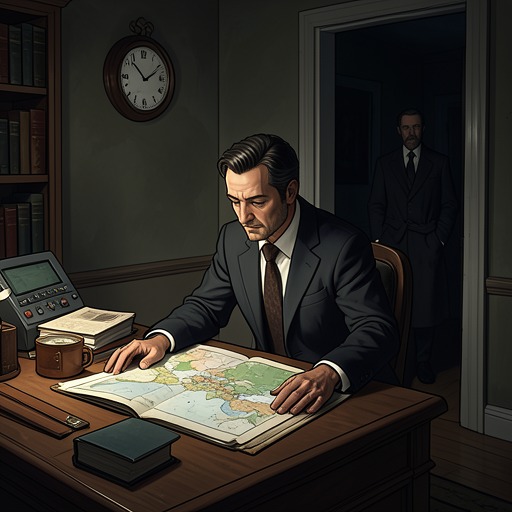
The same fear reaches Sejer while he investigates the intimidation campaign. Reading about amyotrophic lateral sclerosis, he suddenly wonders whether his own dizzy spells and loss of balance could be symptoms. He tries to dismiss the thought as arising in his head, but the possibility has already connected another person’s fatal illness to his own aging body. His imagination turns the body into a countdown, each heartbeat a limited reserve. The fear does not establish that he has the disease; its significance lies in how readily exposure to another person’s approaching death makes his own future feel present.
After hearing the pathologist describe the injuries inflicted on Theo, Sejer cannot escape the image of the child. He thinks of the wolverine postcard on his doormat and recognizes that the intimidation is no longer a game. The novel places this recognition beside the brutal material fact of Theo’s death, making mortality neither a philosophical abstraction nor a distant appointment. Across illness, grief, deception, and violence, the boundary is repeatedly approached from different directions. It can be anticipated in the care of a dying spouse, falsified on a page, or feared in a detective’s own symptoms, but no ritual, reassurance, or act of attention can make it fully controllable.